Rollator Walker with Seat and Basket: Buyer's Guide

Affiliate disclosure: Some links on this page are affiliate links. If you buy through them we earn a small commission at no extra cost to you. Recommendations are research-driven; we don't claim personal use of every product reviewed. Product prices and availability are accurate as of the date published and are subject to change. Always check Amazon for current pricing before purchasing. Learn more.
Important:Consult a qualified occupational therapist or your loved one's physician before purchasing adaptive equipment or making home modifications.

Quick Picks
HOMLAND Walkers for Seniors with Seat, Foldable Rollator Walker, Reinforced Aluminum Frame, 8" Big Rubber Wheels for All Terrain, Height Adjustable Lightweight Rolling Walker
Foldable design enables compact storage and convenient transport
Buy on AmazonMedline Steel Rollator Walker with Seat, Burgundy, 350 lb. Weight Capacity, 6” Wheels, Foldable, Adjustable Handles, Rolling Walker for Seniors, Walker for Mobility Impaired
Steel construction with 350 lb weight capacity for durability
Buy on AmazonWalkers for Seniors with seat, Rollator Walker with Seat, Walkers for Seniors Foldable, 350 lb Capacity, with 8'' Big Wheels, Rolling Walker (Burgundy)
Foldable design enables convenient storage and transportation
Buy on Amazon| Product | Price Range | Top Strength | Key Weakness | Buy |
|---|---|---|---|---|
| HOMLAND Walkers for Seniors with Seat, Foldable Rollator Walker, Reinforced Aluminum Frame, 8" Big Rubber Wheels for All Terrain, Height Adjustable Lightweight Rolling Walker best overall | $$ | Foldable design enables compact storage and convenient transport | Aluminum frame lighter than steel but may have lower weight capacity | Buy on Amazon |
| Medline Steel Rollator Walker with Seat, Burgundy, 350 lb. Weight Capacity, 6” Wheels, Foldable, Adjustable Handles, Rolling Walker for Seniors, Walker for Mobility Impaired also consider | $$ | Steel construction with 350 lb weight capacity for durability | Steel frame heavier than aluminum alternatives when folded | Buy on Amazon |
| Walkers for Seniors with seat, Rollator Walker with Seat, Walkers for Seniors Foldable, 350 lb Capacity, with 8'' Big Wheels, Rolling Walker (Burgundy) also consider | $$ | Foldable design enables convenient storage and transportation | Budget rollator category typically has basic padding comfort | Buy on Amazon |
| Medline Steel Rollator Walker with Seat, Blue, 300 lb. Weight Capacity, 8” Wheels, Foldable, Adjustable Handles, Rollator Walker for Seniors, Rolling Walker for Mobility Impairment also consider | $$ | Steel construction provides durable, stable frame for daily use | 8 inch wheels may require more effort on uneven terrain | Buy on Amazon |
| VOCIC Walkers for Seniors, Z21 Rollator Walker with Seat Supports 350lb, 8" Big Wheels for All Terrain, Ergonomic Arc Seat & 6" Ultra Backrest Foldable Walker, Dual Height Adjustment, Lightweight 2025 also consider | $$ | 350lb weight capacity supports larger users | Rollator walkers typically heavier than standard walkers | Buy on Amazon |
Finding a rollator walker with a seat and basket means sorting through a crowded category where the differences that matter most , weight capacity, wheel size, fold mechanism, and seat height , rarely surface clearly in product listings. A well-chosen rollator supports independent mobility while giving users a place to rest and somewhere to carry what they need. Choosing poorly means a walker that doesn’t fit, doesn’t hold up, or doesn’t actually help. The full range of Walkers & Rollators options is worth understanding before you commit to a specific model.
What separates a genuinely useful rollator from a frustrating one comes down to fit and function , handle height relative to the user, seat height relative to the user’s knees, wheel diameter relative to the surfaces they’ll travel, and weight capacity relative to the user’s body weight with a meaningful safety margin. Each of those variables narrows the field considerably.
What to Look For in a Rollator Walker with Seat and Basket
Weight Capacity and Frame Material
Weight capacity is the first specification to check , and the one most buyers underestimate. The walker’s rated capacity needs to exceed the user’s body weight by a meaningful margin, not just meet it. Most mid-range rollators are rated between 250 lb and 350 lb, and the difference between those thresholds matters for a significant portion of users.
Frame material determines both weight capacity and the walker’s own weight. Steel frames typically support higher loads , the 350 lb-rated models in this category are almost exclusively steel. Aluminum frames are lighter to lift and transport, which matters when loading a walker into a car or carrying it upstairs, but they often carry lower capacity ratings. Occupational therapists commonly recommend matching frame material to the user’s situation: lighter aluminum for frequent travelers, steel for users who need maximum capacity or will use the walker on demanding surfaces every day.
Neither material is universally better. The tradeoff is real, and individual needs vary significantly.
Handle Height and Adjustability
Handle height determines whether a rollator actually supports upright posture or forces the user to hunch forward. The general guideline from OT practice is that handles should align roughly with the user’s wrist crease when they’re standing with arms relaxed at their sides , but height, arm length, and specific condition all affect the right setting.
Most rollators in this category offer tool-free handle height adjustment across a range of roughly 32 to 38 inches, though the exact range varies by model. Before purchasing, confirm the adjustment range covers the user’s height. A walker that adjusts to the right height without tools is meaningfully easier to set up and re-fit than one that requires a wrench.
Some users benefit from consulting an occupational therapist before finalizing a height setting , particularly those with conditions affecting posture or balance.
Wheel Size and Terrain
Wheel diameter affects how a rollator handles transitions between surfaces , from hardwood to carpet, from pavement to a slight curb. Smaller wheels (6 inches) roll smoothly on flat, indoor surfaces and tend to make the walker slightly more maneuverable in tight spaces like hallways and bathrooms. Larger wheels (8 inches) handle outdoor pavement, uneven surfaces, and low curbs more easily, though they can feel slightly less agile indoors.
Most buyers using the rollator primarily indoors , around the home, in stores, in medical facilities , will do fine with either size. Buyers who plan to use the walker regularly outdoors, on uneven ground, or across varied terrain will generally find 8-inch wheels more useful. It’s worth thinking concretely about where the walker will actually be used most of the time.
Seat and Basket Utility
The integrated seat is one of the primary reasons buyers choose a rollator over a standard walker. Seat height, seat width, and cushioning all affect how comfortable and useful the rest function actually is. Most seats in this category are at a height appropriate for average-height adults, but seat height relative to the user’s knee height , not just their overall height , determines whether sitting down and standing back up is practical. A seat that’s too low becomes a barrier rather than a benefit.
Baskets and pouches below the seat are common across this category, but capacity and accessibility vary. A basket that requires the user to bend significantly to access it may not be practical for users with limited mobility. The full range of rollators and walking aids illustrates how much basket design varies between models , it’s worth examining in product images before buying.
Top Picks
HOMLAND Walkers for Seniors with Seat
HOMLAND Walkers for Seniors with Seat stands out in this category for its 8-inch rubber wheels and aluminum frame combination , a pairing that prioritizes portability without sacrificing outdoor capability. Aluminum construction keeps the total weight lower than comparable steel-framed models, which matters when the user or a caregiver needs to fold it and lift it into a vehicle regularly.
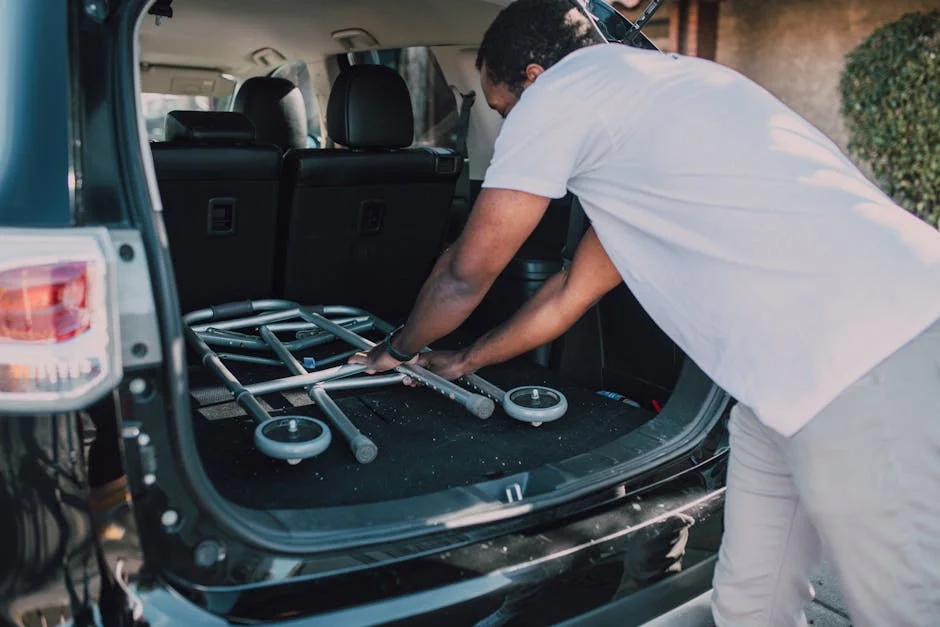
The fold mechanism collapses the walker to a compact footprint for car transport or closet storage. Handle height is adjustable to accommodate a range of user heights, and the integrated seat provides a rest option during longer outings. Weight capacity should be confirmed against the specific user’s needs before purchasing , aluminum-framed walkers in this category generally have lower capacity ratings than steel alternatives, and individual fit depends on the user’s height, weight, and balance situation.
Owner reviews consistently note that the 8-inch wheels perform well on outdoor surfaces , sidewalks, slightly uneven pavement, and transitions between indoor and outdoor flooring. For users who split their time between home use and outdoor walking, the wheel size is a genuine advantage. For users staying primarily indoors in tight spaces, the larger wheel diameter is worth weighing against maneuverability.
Check current price on Amazon.
Medline Steel Rollator Walker with Seat (Burgundy, 350 lb)
The case for the Medline Steel Rollator Walker with Seat in Burgundy is straightforward for users who need a higher weight capacity: a 350 lb rating on a steel frame from a brand with a well-established presence in the clinical mobility space. Medline is widely used in hospital and rehabilitation settings, and that institutional track record carries meaningful weight when caregivers are evaluating whether a brand’s quality control is consistent.
Steel construction means this walker is heavier than aluminum alternatives when folded and lifted. For users or caregivers who need to load the walker into a car frequently, that weight difference is worth factoring in. For users whose primary concern is durability and load-bearing reliability over daily home use, steel’s stiffness and capacity are the stronger argument.
The 6-inch wheels suit indoor and smooth outdoor surfaces well. Foldable handles adjust without tools across a range of heights, though proper initial fitting is important , handle height set too high or too low undermines posture and stability regardless of frame quality. Verified buyers generally describe the build as solid and the fold as consistent over time.
Check current price on Amazon.
Walkers for Seniors with Seat (Burgundy, 8” Wheels, 350 lb)
Walkers for Seniors with Seat combines the two specifications many buyers prioritize most , 350 lb weight capacity and 8-inch wheels , in a foldable package at a mid-range price point. That combination is less common than it might seem; many 350 lb-rated rollators use 6-inch wheels, and many 8-inch-wheel models are rated lower. The pairing here addresses the needs of users who are both larger and active outdoors.
Owner consensus on this model tends to center on its straightforward setup and the practical utility of the larger wheels on varied surfaces. The seat and under-seat basket function as expected for this category. The trade-off to understand is that foldable walkers with steel frames at this capacity rating carry a meaningful amount of weight themselves , relevant whenever the walker needs to be lifted, transported, or stored somewhere other than open floor space.
Seat height and cushioning are adequate for rest breaks rather than extended sitting. As with all rollators in this category, individual comfort depends on the user’s specific proportions, and it’s worth asking an OT about fit if the user has balance concerns or postural considerations beyond typical use.
Check current price on Amazon.
Medline Steel Rollator Walker with Seat (Blue, 300 lb, 8” Wheels)
The Medline Steel Rollator Walker with Seat in Blue occupies a specific position in the Medline lineup , steel construction and 8-inch wheels, with a 300 lb capacity rating rather than the 350 lb of its burgundy counterpart. For users whose weight falls comfortably within that threshold, the 8-inch wheels provide better outdoor performance than the 6-inch-wheel model while retaining Medline’s consistent build quality.
The steel frame delivers stability and a low-flex feel that many users and caregivers find reassuring for daily use. Verified buyers frequently mention the wheel size as the reason they selected this model over smaller-wheeled alternatives , particularly for use on outdoor pavement, across threshold transitions, and on surfaces with slight texture variation. The tradeoff, consistent with steel-frame rollators generally, is that the total walker weight is higher than aluminum alternatives.
Handle height adjusts to fit a range of users, and the foldable design allows for car-trunk storage. The blue colorway is a minor but genuine point of differentiation for users who find the more clinical appearance of standard walkers off-putting. Medline’s customer support and replacement parts availability are consistently cited in the r/AgingInPlace community as advantages of choosing an established brand over no-name alternatives.
Check current price on Amazon.
VOCIC Walkers for Seniors Z21
The VOCIC Walkers for Seniors Z21 is the most feature-forward option in this roundup , dual height adjustment, a 6-inch arc-shaped ergonomic seat, a 6-inch ultra backrest, 8-inch wheels, and a 350 lb capacity, all in a foldable package. For users or caregivers who have struggled with standard rollator seats being uncomfortable for anything beyond a brief rest, the ergonomic seat design and integrated backrest address a real limitation in the category.
Dual height adjustment , typically meaning both handle height and seat height are independently adjustable , gives this model more fit flexibility than single-adjustment rollators, which is particularly relevant for taller users or users whose proportions don’t align well with standard seat-to-handle ratios. Manufacturer specifications indicate the walker handles all-terrain use, supported by the 8-inch wheel diameter. Owner reviews in 2025 consistently note the backrest as a meaningful comfort upgrade over models without one.
The larger wheel size and additional structural features do add to the total walker weight compared to minimalist models. In tight indoor spaces , narrow hallways, small bathrooms, cluttered rooms , the combination of 8-inch wheels and the wider frame required for a 350 lb-rated build is worth assessing against the actual space the user navigates daily. For users who want a rollator that functions as a genuine rest seat with back support during longer outings, the VOCIC Z21 addresses that use case more directly than any other model here.
Check current price on Amazon.
Buying Guide
Matching Weight Capacity to the User
The weight capacity specification is not a target to meet , it’s a floor to exceed. A user weighing 280 lb should not purchase a walker rated exactly at 280 lb. Structural components experience fatigue over time, and a capacity rating at the edge of the limit accelerates wear on welds, joints, and the fold mechanism. Owner reports in this category frequently cite frame failures on models used near their rated limit.
For users in the 200 to 300 lb range, both the 300 lb and 350 lb models in this roundup provide adequate margin. For users above 300 lb, the 350 lb-rated models are the correct starting point , not an optional upgrade. The specific 350 lb-rated options here are the Medline Burgundy, the Walkers for Seniors Burgundy, and the VOCIC Z21.
Choosing Between Steel and Aluminum
Steel frames offer higher weight capacity and a more rigid feel. Aluminum frames are lighter to lift and transport. Neither is objectively superior , the right choice depends on the user’s capacity needs and how often the walker will be folded, carried, and loaded into a vehicle.
For caregivers who lift the walker into a car daily, aluminum’s weight advantage is meaningful over months of use. For users whose primary concern is maximum stability and load capacity during use , and who have reliable help for transport , steel’s structural consistency is the stronger argument. The Walkers & Rollators hub covers both frame materials across a wider range of models if the options here don’t match a specific situation.
Wheel Size and Primary Use Environment
Most buyers fall clearly into one of two use patterns: primarily indoors, or a mix of indoors and outdoors. Primarily indoor users , home, grocery stores, medical appointments in modern facilities , typically find 6-inch wheels sufficient and slightly more maneuverable in tight spaces. Mixed-use buyers, particularly those who walk regularly on outdoor pavement, uneven surfaces, or gravel, will generally find 8-inch wheels worth the minor reduction in indoor agility.
Before selecting wheel size, think concretely about the three or four places the walker will be used most often. If all of those are smooth indoor environments, the 6-inch wheel models are appropriate. If any involve outdoor surfaces or threshold transitions, 8-inch wheels address those transitions more reliably.
Seat Height, Backrest, and Rest Function
Not all rollator seats are equally useful as actual rest seats. A seat that is too low for the user’s knee height, too narrow for the user’s frame, or lacking any back support may technically function as a seat while being impractical for actual rest. For users who expect to use the seat regularly , not just occasionally , seat height adjustability and the presence of a backrest become meaningful selection criteria rather than optional features.
The VOCIC Z21 is the only model in this roundup with an integrated backrest, which occupational therapists often identify as a relevant comfort feature for users who fatigue easily or who plan to use the rollator seat during longer outings. For users who anticipate sitting only briefly and infrequently, a standard flat seat with adequate cushioning is sufficient.
Foldability and Storage Practicality
All five models in this roundup fold for storage and transport, but the resulting folded dimensions and weight differ. A rollator that folds to a compact footprint but still weighs 20+ lb is practical for car-trunk storage but not for carrying up stairs. A lighter model with a somewhat bulkier fold may suit a different living situation better.
Before purchasing, measure the storage space and the car trunk if transport is a regular need. Check the specific folded dimensions and the walker’s total weight in the product specifications. Individual needs vary significantly based on home layout, vehicle type, and whether the user or a caregiver is typically handling transport.
Frequently Asked Questions
What is the difference between a rollator and a standard walker?
A standard walker is a fixed frame that the user picks up and moves forward with each step, providing maximum stability but requiring more upper body effort. A rollator has wheels on all legs and glides forward continuously, requiring less lifting but more balance coordination. Rollators also typically include a built-in seat and a basket, making them more suitable for users who need to rest during walks or carry personal items.
How do I know if a rollator’s weight capacity is sufficient for my needs?
The rated weight capacity should exceed the user’s body weight by a meaningful margin , not merely match it. Structural components experience fatigue over time, and using a walker at or near its rated limit accelerates wear on joints, welds, and the fold mechanism. For users above 300 lb, start with models rated at 350 lb; the Medline Burgundy, VOCIC Z21, and the Walkers for Seniors Burgundy model all meet that threshold.
Are 8-inch wheels or 6-inch wheels better for indoor use?
Both wheel sizes work for indoor use, but 6-inch wheels tend to be slightly more maneuverable in tight spaces such as narrow hallways and small bathrooms. Eight-inch wheels handle threshold transitions and slightly uneven surfaces more smoothly, which matters for users who move between indoor and outdoor environments regularly. For exclusively indoor use in a standard home environment, the wheel size difference is relatively minor , either will function well.
Does a rollator walker require professional fitting, or can I set it up at home?
Most rollators in this category adjust without tools, and manufacturers provide handle-height guidance based on user height. That said, occupational therapists commonly recommend a professional fitting for users with balance disorders, postural conditions, or significant mobility impairments , because handle height that’s even slightly wrong can affect stability meaningfully. For a generally healthy older adult selecting their first rollator, following the manufacturer’s height chart and confirming the wrist-crease alignment guideline is a reasonable starting point.
What is the difference between the Medline Burgundy (350 lb, 6” wheels) and the Medline Blue (300 lb, 8” wheels)?
The two Medline models trade capacity for wheel size. The Medline Burgundy carries a 350 lb capacity with 6-inch wheels, making it the stronger choice for heavier users who use the walker primarily indoors. The Medline Blue is rated at 300 lb but uses 8-inch wheels, making it more capable on outdoor surfaces. The right choice depends on the user’s weight relative to those thresholds and whether outdoor use is a regular part of their routine.
Where to Buy
HOMLAND Walkers for Seniors with Seat, Foldable Rollator Walker, Reinforced Aluminum Frame, 8" Big Rubber Wheels for All Terrain, Height Adjustable Lightweight Rolling WalkerSee HOMLAND Walkers for Seniors with Seat… on Amazon