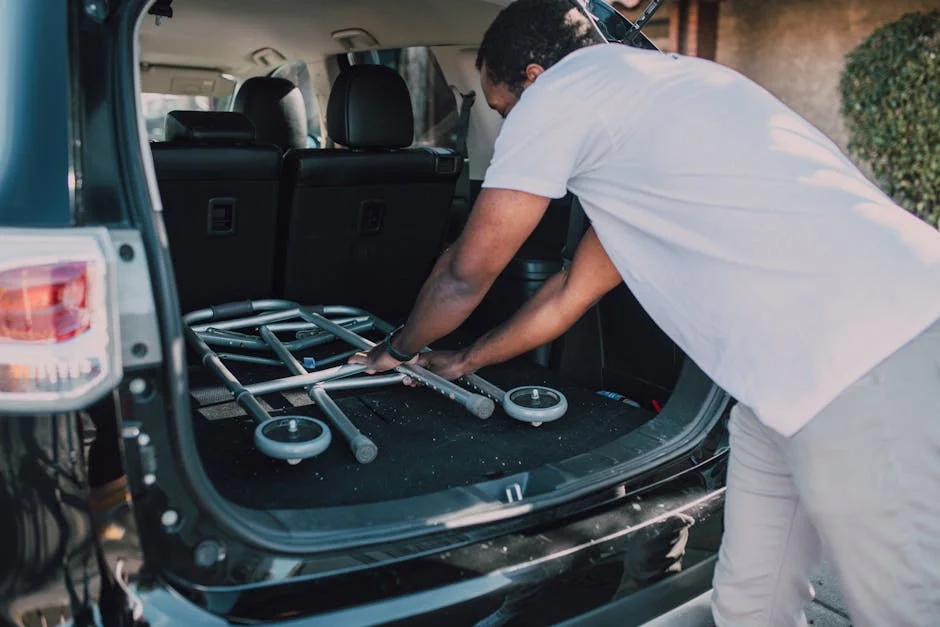
Rollator Walker with Seat: Buyer's Guide & Top Picks

Affiliate disclosure: Some links on this page are affiliate links. If you buy through them we earn a small commission at no extra cost to you. Recommendations are research-driven; we don't claim personal use of every product reviewed. Product prices and availability are accurate as of the date published and are subject to change. Always check Amazon for current pricing before purchasing. Learn more.
Important:Consult a qualified occupational therapist or your loved one's physician before purchasing adaptive equipment or making home modifications.

Quick Picks
Drive Medical Nitro Sprint Foldable Rollator Walker with Seat - Lightweight Support - Large Wheels - Compact Folding Design - Adjustable Comfort - Standard Size - Red
Foldable design enables compact storage and portability
Buy on AmazonHOMLAND Walkers for Seniors with Seat, Foldable Rollator Walker, Reinforced Aluminum Frame, 8" Big Rubber Wheels for All Terrain, Height Adjustable Lightweight Rolling Walker
Foldable design enables compact storage and convenient transport
Buy on AmazonDrive Medical RTL10266CF Nitro Elite CF Foldable Rollator Walker with Seat, Black
Foldable design enables convenient storage and transport
Buy on Amazon| Product | Price Range | Top Strength | Key Weakness | Buy |
|---|---|---|---|---|
| Drive Medical Nitro Sprint Foldable Rollator Walker with Seat - Lightweight Support - Large Wheels - Compact Folding Design - Adjustable Comfort - Standard Size - Red best overall | $$ | Foldable design enables compact storage and portability | Foldable construction may reduce overall structural rigidity | Buy on Amazon |
| HOMLAND Walkers for Seniors with Seat, Foldable Rollator Walker, Reinforced Aluminum Frame, 8" Big Rubber Wheels for All Terrain, Height Adjustable Lightweight Rolling Walker also consider | $$ | Foldable design enables compact storage and convenient transport | Aluminum frame lighter than steel but may have lower weight capacity | Buy on Amazon |
| Drive Medical RTL10266CF Nitro Elite CF Foldable Rollator Walker with Seat, Black also consider | $$ | Foldable design enables convenient storage and transport | Rollator walkers require manual operation and user coordination | Buy on Amazon |
| Walkers for Seniors, Rollator Walker with Seat, 350 lb Weight Capacity, 18" Big Seat, 8" All-Terrain Wheels, 6-Level Adjustable Height, Lightweight Aluminum Frame Rollator Walkers for Seniors (Purple) also consider | $$ | 350 lb weight capacity supports larger users safely | 6-level height adjustment may require manual tuning | Buy on Amazon |
| Drive Medical Rollator Walker with Seat - Stable Mobility Support - Height Adjustable - Durable Steel Frame Construction - Smooth 7.5" Wheels - Foldable - 350 Lb Limit - Blue also consider | $$ | Durable steel frame provides stable support for daily mobility | Rollator walkers require more space than folding canes | Buy on Amazon |
Finding a rollator walker with a seat that fits your parent’s height, weight, and daily routine takes more research than most people expect. The category spans lightweight aluminum frames and heavier steel builds, small indoor wheels and large all-terrain ones , and the wrong choice can sit unused in a hallway within a week. Exploring the full range of options across Walkers & Rollators before narrowing down is time well spent.
What separates a rollator that gets used every day from one that doesn’t comes down to fit, portability, and confidence in the brakes. Owner reviews and occupational therapy community resources consistently point to the same culprits when a rollator fails: seat height that doesn’t match the user, a fold mechanism too stiff for arthritic hands, or wheels too small for the surfaces the person actually walks on.
What to Look For in a Rollator Walker with Seat
Frame Material and Weight Capacity
Rollator frames come in two primary materials: aluminum and steel. Aluminum frames are lighter , typically in the range of 13 to 18 pounds , which matters significantly for users who need to lift the walker into a car or carry it up a step. Steel frames are heavier but generally offer higher weight capacity and a more rigid feel under load.
Weight capacity is a non-negotiable specification to check before purchasing. Many standard rollators are rated for 250 to 300 pounds, but bariatric options extend to 350 pounds and above. Verified owner reviews on medical supply sites frequently flag the consequences of underestimating this , a frame that flexes under a heavier user erodes confidence quickly. Always check the manufacturer’s stated weight limit against the user’s current weight, with some margin for safety.
The frame’s rigidity also affects seat comfort. A flex in the frame during seated rest can feel unstable, particularly for users with balance concerns. Occupational therapists commonly note that perceived stability is as important as actual stability , if the user doesn’t trust the seat, they won’t use it.
Wheel Size and Surface Compatibility
Wheel diameter is one of the most practically important specifications in this category, and one of the most commonly overlooked. Smaller wheels , in the five- to six-inch range , roll smoothly on flat indoor floors but struggle with sidewalk cracks, gravel, or grass. Larger wheels, in the eight-inch range, handle outdoor and mixed-surface use considerably better and tend to require less effort to push over thresholds.
Rubber-tired wheels provide better grip and vibration absorption than hard plastic wheels, particularly on uneven pavement. For users who move between indoor and outdoor environments , a common pattern for people aging in place who walk to mailboxes, community centers, or parking lots , larger rubber wheels represent a meaningful functional upgrade.
The wheel’s swivel behavior matters too. Front wheels that lock straight can aid users who need directional stability; fully swiveling casters give more maneuverability in tight indoor spaces. Most rollators in this category use swiveling fronts as standard.
Seat Height and Handle Adjustability
Handle height should place the user’s wrists at a relaxed, nearly straight angle when standing upright. Too low, and the user hunches forward , a common complaint in Amazon reviews from taller users who received a standard-size rollator. Too high, and the posture becomes awkward and tiring.
Most rollators in this category offer handle height adjustment in a range of roughly 32 to 39 inches, though the exact range varies by model. Check whether height adjustment requires tools or is tool-free , for caregivers managing multiple users or making frequent adjustments, tool-free mechanisms matter.
Seat height is a separate specification from handle height. The seat should allow the user to sit with feet flat on the floor and knees at roughly a 90-degree angle. Many rollators have a fixed seat height, which means this measurement needs to match the user’s leg length before purchase. Seat width is equally relevant , a narrower seat may be uncomfortable for extended rest breaks. Reviewing the full range of rollator and walker options by frame size can help narrow down which models are worth a closer look for a specific user’s dimensions.
Top Picks
Drive Medical Nitro Sprint Foldable Rollator Walker with Seat
The Drive Medical Nitro Sprint is built around portability. The fold mechanism is designed for single-handed operation, which owner reviews consistently identify as one of its most practical features for users who need to get the rollator into and out of a vehicle without help. The large wheels improve traction on mixed surfaces , sidewalks and parking lots included , and the overall design reflects Drive Medical’s substantial experience in this category.
Weight capacity is worth checking against the user’s specific needs before purchasing. As a lightweight model, the Nitro Sprint’s build prioritizes portability over maximum load rating, and verified buyers note that the frame feels appropriately solid within its rated range but is not the right choice for heavier users. Handle height is adjustable without tools across a standard range, and the integrated seat provides a resting option during outings.
Owner feedback highlights the compact fold as a genuine day-to-day convenience rather than a marketing feature , the folded dimensions are meaningfully smaller than older-generation rollators, which matters for apartment storage and smaller vehicle trunks. Individual fit still depends on user height; taller users should verify the maximum handle height before ordering.
Check current price on Amazon.
HOMLAND Walkers for Seniors with Seat
The HOMLAND rollator stands out for its eight-inch rubber wheels, which place it among the better-equipped options in this price band for users who spend time on varied terrain. Eight-inch wheels clear sidewalk gaps and small thresholds with noticeably less resistance than five- or six-inch alternatives, and the rubber construction absorbs vibration on uneven pavement.
The reinforced aluminum frame keeps overall weight manageable while the seat provides a rest point during longer outings. Verified buyer reviews note the frame feels stable during seated use, though , as with most aluminum rollators , the weight capacity falls below steel-frame alternatives. Users approaching the upper end of a standard weight rating should verify the manufacturer specification before purchasing.
Height adjustment is tool-free and covers a range appropriate for most users of average to slightly above-average height. The fold mechanism is functional for transport, though some owner reviews note it takes a brief learning period to operate smoothly. For users moving between indoor and outdoor environments regularly, the eight-inch wheel diameter is a meaningful practical advantage.
Check current price on Amazon.
Drive Medical RTL10266CF Nitro Elite CF Foldable Rollator Walker with Seat
The Drive Medical Nitro Elite CF represents the more refined end of Drive Medical’s Nitro line. The CF designation refers to the frame’s construction approach, which results in a lighter overall package than standard aluminum rollators of similar width. For users who prioritize low carrying weight above other factors, this model’s weight-to-rigidity ratio draws consistent positive attention in owner reviews.
The fold is smooth and repeatable , a characteristic that matters more than it might initially seem. Rollators that are awkward to fold get left unfolded, which increases the risk of tripping over them at home. The Nitro Elite CF’s mechanism is a genuine strength here, and caregivers managing transport logistics for a parent or spouse note it as one of the model’s most reliable practical features.
The integrated seat and handbrake system follow Drive Medical’s standard Nitro engineering. The brakes engage with moderate hand pressure and lock for seated rest, which occupational therapy community resources commonly identify as an important feature for users with reduced grip strength. Weight capacity and handle height range should be verified against the specific user’s measurements before ordering.
Check current price on Amazon.
Walkers for Seniors Rollator Walker with Seat
The 350-pound weight capacity of the Walkers for Seniors rollator is the specification that sets it apart in this group. Most standard rollators are rated for 250 to 300 pounds; this model extends meaningfully beyond that, and the 18-inch seat width provides proportionally more comfort for larger users during rest breaks. For buyers whose primary concern is finding a rollator that accommodates a heavier user without flex or instability, this model warrants serious consideration.
The eight-inch all-terrain wheels reinforce its versatility across surfaces, and the six-level height adjustment covers a range appropriate for users of varying stature. Owner reviews note that the adjustment process is straightforward, though , as with most multi-level systems , finding the optimal position may require working through a couple of settings before landing on the right one.
The aluminum frame keeps weight manageable relative to its capacity rating, a balance that steel-frame alternatives at this weight limit often don’t match as well. Verified buyers consistently note stability during seated use as a positive, which is particularly relevant for a model designed for users where seat integrity matters most.
Check current price on Amazon.
Drive Medical Rollator Walker with Seat
The Drive Medical steel-frame rollator makes a different trade-off than the other models here: it prioritizes structural rigidity and a 350-pound weight limit over lightweight portability. The steel frame adds meaningful weight compared to aluminum alternatives , owner reviews typically note this as the model’s primary trade-off , but the rigidity translates to a planted, stable feel during both walking and seated use.
The 7.5-inch wheels occupy a middle ground between smaller indoor wheels and the larger eight-inch all-terrain options. They handle standard indoor and neighborhood outdoor use well, though users who regularly navigate rougher outdoor surfaces may find the larger-wheeled aluminum options more capable. Height adjustment is available across a standard range and does not require tools.
For users who prioritize stability and weight capacity over portability, and who don’t need to lift the walker into a vehicle regularly, the steel-frame construction offers a compelling case. Verified owner reviews cite confidence in the frame’s solidity over extended daily use as the model’s strongest attribute. The integrated seat with a 350-pound rating provides reliable rest support for heavier users.
Check current price on Amazon.
Buying Guide
Matching the Walker to the User’s Physical Profile
The single most important pre-purchase step is matching handle height range to the user’s actual standing height. A rollator with handles set too low causes forward hunching, which increases fatigue and reduces balance. Manufacturers publish the minimum and maximum handle height for each model, and these numbers should be checked against the user’s height , not estimated. Most rollators in this category adjust between roughly 32 and 39 inches, which covers a wide range, but outliers exist.
Weight capacity follows immediately. If the user’s weight is within 20 to 30 pounds of a model’s stated limit, the stronger choice is a higher-rated model. Operating near maximum capacity affects both the frame’s longevity and the user’s sense of stability.
Seat height and seat width are often overlooked because they aren’t prominent in marketing copy. A seat that’s too high leaves feet dangling; one that’s too narrow is uncomfortable for extended rest. Check both specifications against the user’s leg length and build.
Portability vs. Structural Rigidity
Aluminum rollators are lighter and easier to transport, which matters for users who travel, attend appointments, or need to load the walker into a vehicle frequently. Steel-frame models are heavier but typically offer a more rigid seated feel and, in several cases, a higher weight capacity.
The fold mechanism quality is worth researching specifically , not all fold designs are equal. A mechanism that requires two hands and significant force is a meaningful obstacle for users with arthritis or reduced grip strength. Owner reviews are the most reliable source for honest assessments of fold ease, since manufacturer descriptions consistently present the best-case scenario.
For users who primarily use the rollator indoors and have reliable help with transport, the portability advantage of aluminum matters less. For users managing independently, the weight difference between a 15-pound aluminum model and a 22-pound steel model is felt every time the walker goes into a car.
Wheel Size and the Surfaces the User Actually Walks On
Before purchasing, map the environments the user actually navigates: home floors, exterior walkways, parking lots, community center hallways. Five- to six-inch wheels handle flat indoor surfaces well. Eight-inch wheels handle outdoor mixed surfaces , sidewalk seams, gravel edges, threshold lips , without the user having to work for momentum.
The broader Walkers & Rollators category includes both small-wheel indoor models and large-wheel outdoor options; choosing the wrong type for the user’s actual environment is one of the most common sources of post-purchase dissatisfaction. If there’s genuine uncertainty about which environment will dominate, eight-inch wheels are the more forgiving choice.
Brake Quality and Ease of Use
Rollator brakes serve two functions: slowing the walker during use and locking it for seated rest. Both functions need to work reliably for the user’s grip strength. Loop brakes , the most common type , engage by squeezing handles downward. Users with reduced hand strength may find this mechanism tiring.
Some models require the brakes to be locked before the seat can safely bear weight. This is a critical safety consideration, and it’s worth reviewing the specific brake locking mechanism for any model under consideration. Occupational therapists commonly recommend practicing the brake lock sequence before relying on the seat in public settings.
Assessing Fit Before the First Use
Before the user takes the rollator on a first outing, spending time with it indoors , adjusting handle height, practicing the fold, and sitting on the seat , is strongly recommended by the r/AgingInPlace community and caregiver resources alike. Individual needs vary significantly, and what works for one user’s height, strength, and gait pattern may not suit another’s even with the same diagnosis. Before purchasing, it’s worth asking an OT about your specific situation if the user has significant balance impairment or complex mobility needs.
Frequently Asked Questions
What is the difference between a rollator walker with seat and a standard walker?
A standard walker has four fixed legs and requires the user to lift and place it with each step, which demands more upper body effort and coordination. A rollator has wheels on all four legs and rolls continuously, reducing the lifting requirement. The integrated seat on a rollator also provides a rest option during outings , a feature standard walkers don’t offer. Rollators require somewhat more coordination to use safely, which is worth discussing with an occupational therapist before switching from a fixed walker.
Is the Drive Medical Nitro Sprint or the steel-frame Drive Medical rollator the better choice for everyday outdoor use?
For outdoor use on mixed surfaces, the Drive Medical Nitro Sprint is the stronger choice for most users , its larger wheels and lighter weight make it easier to manage on sidewalks and parking lots. The Drive Medical steel-frame rollator offers more structural rigidity and a 350-pound weight capacity, making it the better fit for heavier users who prioritize stability over portability. The right answer depends on the user’s weight, strength, and how often the walker needs to be transported.
What weight capacity should I look for in a rollator walker?
The general guidance from verified owner reviews and product documentation is to choose a rollator rated comfortably above the user’s current weight , not at or just below it. Standard rollators are commonly rated for 250 to 300 pounds; bariatric models extend to 350 pounds and above. The Walkers for Seniors rollator and the steel-frame Drive Medical model both carry 350-pound ratings, making them the appropriate starting point for heavier users. Operating near a frame’s weight limit affects both stability and long-term durability.
How do I know if a rollator’s seat height will work for the user?
The seated position should allow feet to rest flat on the floor with knees at approximately a 90-degree angle. Many rollators have a fixed seat height rather than an adjustable one, so this measurement needs to match the user’s leg length before purchase. Manufacturer product pages list seat height in the specifications section. Seat width matters equally for comfort during rest breaks , a minimum of 17 to 18 inches accommodates most users comfortably, and the Walkers for Seniors rollator specifically offers an 18-inch seat.
Can a rollator walker be used on carpet as well as hard floors and outdoor pavement?
Most rollators in this category handle low-pile carpet reasonably well, though resistance increases on thicker pile. Larger wheels , eight inches , roll more easily across carpet and outdoor surfaces than smaller five- or six-inch alternatives. Medium-pile carpet can be challenging regardless of wheel size, and users who spend significant time on carpet may find pushing effort increases meaningfully compared to hard floors. Owner reviews are the most reliable source for real-world carpet performance, as manufacturer descriptions rarely address this specifically.
Where to Buy
Drive Medical Nitro Sprint Foldable Rollator Walker with Seat - Lightweight Support - Large Wheels - Compact Folding Design - Adjustable Comfort - Standard Size - RedSee Drive Medical Nitro Sprint Foldable R… on Amazon