Walker Rollator with Seat Buyer's Guide: What to Know

Affiliate disclosure: Some links on this page are affiliate links. If you buy through them we earn a small commission at no extra cost to you. Recommendations are research-driven; we don't claim personal use of every product reviewed. Product prices and availability are accurate as of the date published and are subject to change. Always check Amazon for current pricing before purchasing. Learn more.
Important:Consult a qualified occupational therapist or your loved one's physician before purchasing adaptive equipment or making home modifications.

Quick Picks
VOCIC Walkers for Seniors, Z21 Rollator Walker with Seat Supports 350lb, 8" Big Wheels for All Terrain, Ergonomic Arc Seat & 6" Ultra Backrest Foldable Walker, Dual Height Adjustment, Lightweight 2025
350lb weight capacity supports larger users
Buy on AmazonDrive Medical Rollator Walker with Seat - Stable Mobility Support - Height Adjustable - Durable Steel Frame Construction - Smooth 7.5" Wheels - Foldable - 350 Lb Limit - Blue
Durable steel frame provides stable support for daily mobility
Buy on AmazonVOCIC Walkers for Seniors, Z21 Rollator Walker with Seat Supports 350lb, 8" Big Wheels for All Terrain, Ergonomic Arc Seat & 6" Ultra Backrest Foldable Walker, Dual Height Adjustment, Lightweight 2026
350lb weight capacity accommodates larger users
Buy on Amazon| Product | Price Range | Top Strength | Key Weakness | Buy |
|---|---|---|---|---|
| VOCIC Walkers for Seniors, Z21 Rollator Walker with Seat Supports 350lb, 8" Big Wheels for All Terrain, Ergonomic Arc Seat & 6" Ultra Backrest Foldable Walker, Dual Height Adjustment, Lightweight 2025 best overall | $$ | 350lb weight capacity supports larger users | Rollator walkers typically heavier than standard walkers | Buy on Amazon |
| Drive Medical Rollator Walker with Seat - Stable Mobility Support - Height Adjustable - Durable Steel Frame Construction - Smooth 7.5" Wheels - Foldable - 350 Lb Limit - Blue also consider | $$ | Durable steel frame provides stable support for daily mobility | Rollator walkers require more space than folding canes | Buy on Amazon |
| VOCIC Walkers for Seniors, Z21 Rollator Walker with Seat Supports 350lb, 8" Big Wheels for All Terrain, Ergonomic Arc Seat & 6" Ultra Backrest Foldable Walker, Dual Height Adjustment, Lightweight 2026 also consider | $$ | 350lb weight capacity accommodates larger users | Rollator walkers heavier than standard walkers, require more storage space | Buy on Amazon |
| HOMLAND Foldable Rollator Walkers with Seat for Seniors, 8'' Big Wheels, 350 lb. Weight Capacity, Adjustable Handles and Seat Height, Lightweight Rolling Walker, Red also consider | $$ | 8 inch wheels provide better stability on uneven surfaces | Foldable design may reduce frame rigidity versus fixed models | Buy on Amazon |
| Drive Medical Aluminum Rollator Walker - Fold Up - Padded Seat - 6 Inch Wheels - Lightweight Portable Design - Indoor Outdoor Mobility Aid - Blue also consider | $$ | Folds up for compact storage and transport | Six-inch wheels may handle rough terrain less effectively | Buy on Amazon |
Finding a walker rollator with seat that fits reliably into daily life means weighing more factors than most product listings make obvious. Seat height, wheel size, frame weight, and weight capacity all interact , and what works well for one user may be wrong for another. The full range of Walkers & Rollators options is broader than this guide covers, so understanding the criteria first matters.
A rollator with a built-in seat is a meaningfully different tool than a standard walker. The seat adds rest-break capability without needing to find a chair, but it also adds weight and bulk. The products below represent a cross-section of what verified buyers and manufacturer specifications support across this category.
What to Look For in a Walker Rollator with Seat
Weight Capacity and Frame Material
Weight capacity is the first number to check , not because most users are near the limit, but because a frame rated for more weight than the user requires tends to be more rigid and stable overall. Most rollators in this category are rated for 300, 350 lbs. Users whose weight is near or above a model’s stated limit should look specifically for 350 lb-rated frames and verify that the seat itself shares that rating , the frame and seat ratings are sometimes different.
Frame material shapes every other characteristic. Steel frames are heavier than aluminum but often feel more planted and are generally less expensive at a given weight-capacity rating. Aluminum frames save meaningful weight , relevant for users who lift the rollator into a car regularly , but may flex more under load. For users who are stationary most of the time, frame weight matters less. For users who transport the rollator frequently, it matters quite a lot.
Wheel Size and Surface Compatibility
Six-inch wheels are the traditional standard for rollators designed primarily for smooth indoor floors , hallways, grocery stores, medical offices. They roll smoothly on flat surfaces and are easy to steer around corners. Eight-inch wheels handle cracks in pavement, thresholds, and soft ground more effectively, but they add width and can make the rollator feel less maneuverable in narrow spaces like bathroom doorways.
The practical question is where the rollator will be used most. A user who moves primarily between indoor rooms and occasionally crosses a parking lot can manage well with six-inch wheels. A user who regularly walks on uneven outdoor surfaces , garden paths, gravel driveways, cracked sidewalks , will find eight-inch wheels meaningfully more stable. Verified buyers consistently note that smaller wheels catch more frequently on surface irregularities outdoors.
Handle Height Adjustment and Fit
Handle height is one of the most important fit variables and one of the easiest to overlook. The general guidance from occupational therapists is that handle height should allow a slight bend at the elbow , roughly a 15-degree flex , when the user is standing upright and holding the handles. A rollator set too low forces the user to hunch; set too high, it shifts weight onto the wrists rather than distributing it through the frame.
Most rollators in this category offer tool-free height adjustment via push-button or pin mechanisms. Some require an Allen wrench or similar tool. Tool-free adjustment matters more than it sounds , it makes it possible to fine-tune fit at home without assistance. Height range varies by model; taller users (above 6 feet) and shorter users (below 5’2”) should verify that a specific model’s stated adjustment range covers their height before purchasing.
Seat Height, Seat Depth, and Backrest Support
The seat on a rollator serves a specific purpose: a convenient, safe place to rest briefly when fatigued. It is not a primary seating surface. Seat height should allow the user to sit with feet flat on the floor and hips at or slightly above knee level , the same principle that governs any supportive seating. Seats that are too high leave feet dangling; seats that are too low require effort to rise from.
Seat depth on most rollators is relatively shallow , eight to ten inches is common , which is functional for brief rest breaks but not extended sitting. Backrest height varies significantly. Some models include a low strap backrest; others offer a taller, more supportive back panel. Users who need back support while seated should verify backrest height before purchase. Individual needs vary significantly, and what constitutes adequate support depends on the user’s specific condition and trunk stability.
Folding Mechanism and Storage
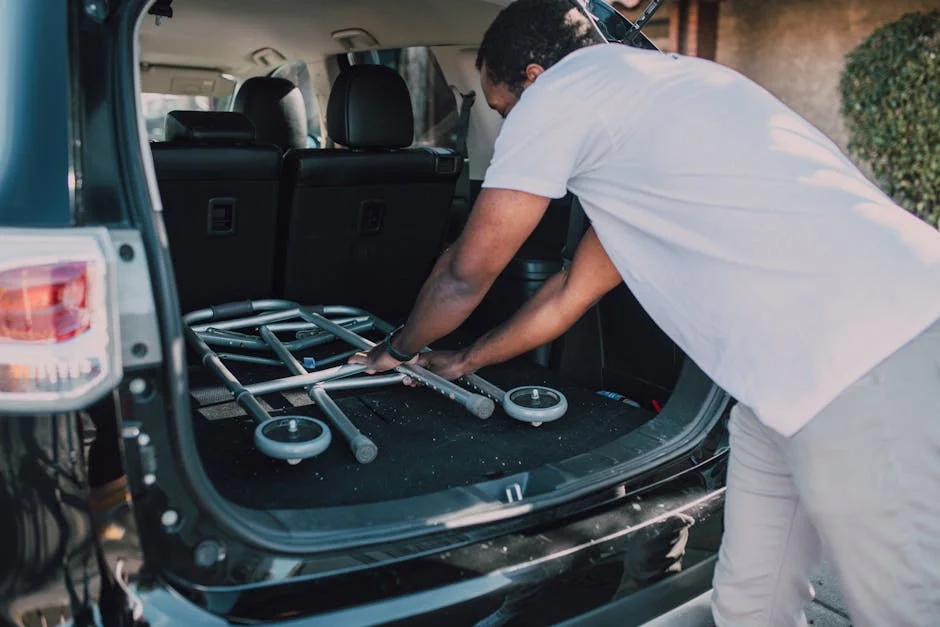
Most rollators in this category fold for transport and storage. The folding mechanism matters for two reasons: ease of operation and how compact the folded frame actually is. A rollator that folds but still occupies significant trunk space is less useful for users who transport it in smaller vehicles. Most models fold by lifting the frame upward from the center or pulling a strap , neither requires significant strength, but mechanism quality varies.
Before committing to a model, it is worth considering the full range of mobility walker options alongside this category, particularly if the user’s needs are evolving. A rollator with a seat is a good choice for users who need rest breaks while mobile; it is not always the right choice for users whose primary need is close-contact stability support.
Top Picks
VOCIC Z21 Rollator Walker with Seat (2025)
The case for this rollator is straightforward for users who spend time on mixed surfaces. The 8-inch wheels on the VOCIC Z21 2025 are one of its clearest differentiators from more traditional rollators , owner reviews and field reports consistently note that the larger wheels reduce catching on outdoor surface irregularities like sidewalk cracks and threshold lips. The 350 lb weight capacity is toward the top of this category.
The ergonomic arc seat and 6-inch backrest are notable. Seat height adjustability covers a reasonable range for average-height users, though taller users should verify the adjustment range against their specific measurement. Dual height adjustment on the handles means both handles can be set independently , useful for users with asymmetric needs or a dominant-side preference. Tool-free adjustment is confirmed.
Folding is reported as straightforward by verified buyers. The frame is aluminum, which keeps weight manageable relative to the 350 lb capacity and large wheel size. Users in tight indoor spaces , narrow hallways, small bathrooms , should factor in that the 8-inch wheels add overall width. The balance of terrain versatility, seat quality, and weight capacity makes this a strong option for users with mixed indoor-outdoor use patterns.
Check current price on Amazon.
Drive Medical Rollator Walker with Seat , Steel Frame
Established clinical and consumer reputation is one of the reasons the Drive Medical steel-frame rollator appears consistently in occupational therapy community recommendations. Drive Medical is a known quantity in the adaptive equipment space , verified buyers and caregivers report that parts availability and customer service are more predictable than with newer brands. The steel frame provides a solid, planted feel that some users prefer over the slightly more flex-prone aluminum alternatives.
The 350 lb weight limit applies to the frame, and the 7.5-inch wheels land between the traditional 6-inch and the larger 8-inch options , a reasonable middle ground for users who divide time between indoor settings and moderately uneven outdoor surfaces. Integrated seat with a padded surface is included; seat height adjusts within a standard range appropriate for most average-height users. Height-adjustable handles use a tool-free mechanism.
The trade-off is weight. Steel is heavier than aluminum, and users who regularly lift the rollator into a vehicle trunk will feel that difference over time. For users whose rollator lives primarily at home or in a single location and travels infrequently, the steel frame’s solidity is a genuine advantage. Owner consensus points to this as a reliable daily-use option, particularly for users who prioritize stability over portability.
Check current price on Amazon.
VOCIC Z21 Rollator Walker with Seat (2026)
The 2026 version of the VOCIC Z21 shares its core specification profile with the 2025 model , 350 lb capacity, 8-inch wheels, folding frame , with manufacturer updates that are worth noting for buyers researching both. The VOCIC Z21 2026 carries the same all-terrain wheel advantage and the same seat-and-backrest configuration.
Verified buyer reports on the 2026 version are newer and therefore thinner in volume than the 2025 model, which limits how confidently the field evidence can be summarized. The core specifications are consistent with what buyers reported on the earlier version: solid folding mechanism, manageable weight for an aluminum frame at this capacity, and wheels that perform better than 6-inch alternatives on outdoor surfaces. Buyers who are comparing the two VOCIC versions directly should check both ASINs for current review volume , the 2025 model has more accumulated owner feedback, which tends to surface edge-case issues more reliably.
One consistent note from early verified buyers on the 2026 version: the 8-inch wheels are slightly louder on smooth hard floors than smaller-wheel rollators. Users who move primarily indoors and prioritize quiet rolling may find this relevant.
Check current price on Amazon.
HOMLAND Foldable Rollator Walker with Seat
The HOMLAND rollator lands in a similar specification bracket as the VOCIC models , 8-inch wheels, 350 lb capacity, integrated seat with adjustable height , but comes from a brand with a shorter track record in the adaptive equipment category. That context matters for buyers who rely on brand-level support, warranty clarity, or parts availability over time.
The 8-inch wheels provide the same surface-handling advantages as other models in this group: better performance on uneven outdoor terrain, more stable crossing of threshold lips and pavement cracks. Handle height is adjustable; seat height adjusts within the standard range. Folding mechanism is described as straightforward by early verified buyers. The red colorway is the listed option, which some users find easier to locate visually in a home environment.
For buyers who prioritize established brand reputation , particularly relevant for users who may need support or replacement parts , the Drive Medical options in this list carry more institutional backing. For buyers who are comfortable with a newer brand and are primarily focused on specifications and price band, the HOMLAND represents a reasonable mid-range option with the all-terrain wheel advantage.
Check current price on Amazon.
Drive Medical Aluminum Rollator Walker
For users whose primary environment is indoors , home hallways, medical offices, shopping environments with smooth floors , the Drive Medical aluminum rollator is worth serious consideration. The 6-inch wheels are the defining trade-off here: they manage smooth surfaces well and keep the rollator narrower and more maneuverable than 8-inch wheel models, but they handle rough outdoor terrain less effectively.
Aluminum construction is the key practical advantage. The lighter frame reduces the effort required to fold and lift the rollator , meaningful for users who transport it independently or who fatigue easily. The padded seat is included and provides comfort appropriate for brief rest breaks. Handle height adjusts within a standard range; the tool-free mechanism is confirmed by verified buyers.
Drive Medical’s reputation in the category provides the same brand-level assurance noted on the steel-frame model above. Owner reviews consistently describe this as a reliable, no-complications daily-use rollator for primarily indoor settings. The narrower wheel base improves navigation in tight spaces , a practical advantage for users in older homes with narrow doorways and hallways.
Check current price on Amazon.
Buying Guide
Indoor vs. Outdoor Use Patterns
The single most decision-shaping variable in this category is where the rollator will be used most. Rollators with 6-inch wheels are well-suited to smooth interior surfaces , level floors, wide hallways, commercial spaces. Rollators with 8-inch wheels handle the transition to outdoor surfaces more effectively, including cracked pavement, gravel paths, and soft ground. Most users in this category move between both environments, which makes 8-inch wheels the more versatile choice for mixed use. Users who are genuinely confined to smooth interior surfaces may find the narrower profile of a 6-inch wheel model more practical in tight spaces.
Weight Capacity and Who It Protects
A 350 lb weight capacity does not only matter for users near that weight. Frames rated for higher loads tend to have more rigid construction overall , the engineering that supports the higher capacity also contributes to reduced flex and shake at lower loads. For users who prioritize a planted, solid feel while walking, a 350 lb-rated frame may feel more stable than a 250 lb-rated frame even if the user is well within either limit. Verified buyers across this category note that frame rigidity affects confidence more than any single feature.
Frame Material: Steel vs. Aluminum
Steel frames are heavier and generally more rigid. Aluminum frames are lighter and easier to lift. The practical question is how often the rollator needs to be transported , lifted into a car, carried up a step, moved between floors. For users whose rollator lives primarily in one location and moves infrequently, the weight difference between steel and aluminum is a minor factor. For users who transport the rollator daily, aluminum’s weight advantage compounds meaningfully over time. Exploring the full range of walker and rollator frame options can help clarify which construction suits a specific use pattern.
Handle Height and Proper Fit
Occupational therapists commonly describe the elbow-angle principle: handles should produce a slight bend , roughly 15 degrees , when the user stands upright and holds the grips naturally. A rollator set too low promotes forward lean and back strain. Set too high, it loads the wrists rather than distributing support through the frame. Most models in this category offer tool-free adjustment, which makes it practical to fine-tune fit without assistance. Taller users (above 6 feet) and shorter users (below 5’2”) should verify the specific adjustment range listed in the product specifications before purchasing , stated ranges vary by model.
Seat and Backrest Considerations
The seat on a rollator is a rest surface, not a primary chair. Seat depth on most models in this category is eight to ten inches , adequate for brief rest breaks, not suitable for extended sitting. Seat height should allow feet to rest flat on the floor when seated; a seat that is too high leaves feet unsupported, which affects both comfort and safety when rising. Backrest height varies more than seat depth across models: low strap-style backs provide minimal lumbar contact; taller panel-style backs offer more trunk support. Individual needs vary significantly, and users with specific trunk stability concerns should discuss seating support requirements with an occupational therapist before selecting a model.
Frequently Asked Questions
What is the difference between a walker and a rollator with a seat?
A standard walker lifts and places with each step and has no wheels or limited front wheels. A rollator rolls continuously on four wheels and includes hand brakes for control. The integrated seat on a rollator with seat adds a rest-break option without needing to locate a chair. Rollators are generally better suited to users who can walk continuously but need support and periodic rest stops.
How do I know if the seat height is right for me?
Seat height is correct when you can sit with both feet flat on the floor and your hips at or slightly above knee level. A seat that is too high leaves feet unsupported and increases the effort to rise safely. A seat that is too low places strain on the hips and knees during the sit-to-stand transition. Most models in this category offer seat height adjustment; verify the adjustment range against your specific measurement before purchasing.
Are 8-inch wheels significantly better than 6-inch wheels for outdoor use?
Owner reports and field evidence consistently show that 8-inch wheels handle outdoor surface irregularities more effectively than 6-inch wheels , specifically cracks in pavement, threshold lips, and soft ground. The trade-off is that 8-inch wheels add overall width, which reduces maneuverability in narrow indoor spaces. For primarily indoor use, the difference is minor. For users who regularly cross parking lots, garden paths, or uneven sidewalks, the larger wheels provide a meaningful stability advantage.
Which rollator is better for a heavier user , the VOCIC Z21 or the Drive Medical steel-frame model?
Both the VOCIC Z21 and the Drive Medical steel-frame rollator carry a 350 lb weight rating, so capacity is equivalent. The Drive Medical steel frame may feel more rigid underfoot due to the material, which some heavier users prefer. The VOCIC aluminum frame is lighter to transport. The more relevant variable is use pattern: if the rollator stays in one location and transport is infrequent, steel is a reasonable choice; if lifting into a vehicle is part of the daily routine, aluminum saves meaningful effort.
Do rollators with seats fold compactly enough to fit in a car trunk?
Most rollators in this category fold by lifting the seat upward from the center, reducing the frame to a flat or near-flat profile. Folded dimensions vary by model and are listed in manufacturer specifications , checking the specific folded width and length against available trunk space before purchasing is recommended. Narrower trunks and compact cars may require a rollator with a smaller wheel base. The Drive Medical aluminum rollator is among the lighter options in this group, which eases lifting even if the folded dimensions are similar to heavier models.
Where to Buy
VOCIC Walkers for Seniors, Z21 Rollator Walker with Seat Supports 350lb, 8" Big Wheels for All Terrain, Ergonomic Arc Seat & 6" Ultra Backrest Foldable Walker, Dual Height Adjustment, Lightweight 2025See VOCIC Walkers for Seniors, Z21 Rollat… on Amazon